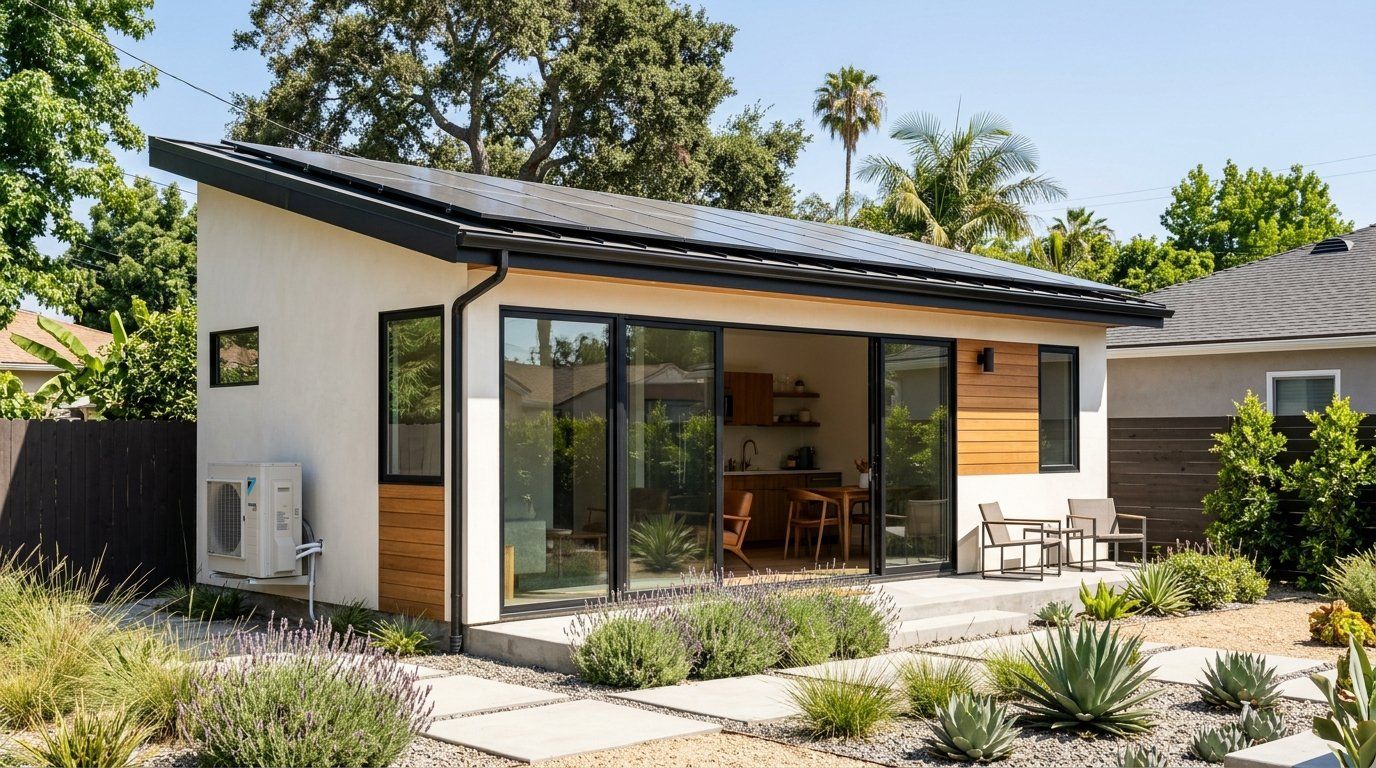
Title 24 Compliance: ADU Energy Savings for LA Homeowners
For Los Angeles and Orange County homeowners looking to build an Accessory Dwelling Unit (ADU) or convert a garage, understanding Title 24, Part 6 of the California Building Code is non-negotiable. This energy code dictates the minimum energy efficiency standards for new construction and additions, including ADUs. Failing to comply means costly rework and delayed occupancy. Properly designed and installed energy-efficient systems not only meet code but also significantly reduce long-term utility bills, boosting your ADU's return on investment. SkillSee, CSLB Lic #1110475, specializes in compliant, high-quality construction for projects like garage conversions to ADU and new ADUs, ensuring your project is built right the first time. We navigate the complexities of LADBS and local city permitting, focusing on practical energy savings that benefit homeowners.
What is Title 24 Part 6?
Title 24 Part 6 is California's energy efficiency standards for buildings. For ADUs and garage conversions, it primarily focuses on reducing energy consumption through efficient building envelopes (insulation, windows, doors) and effective mechanical systems (heating, ventilation, air conditioning – HVAC, and water heating). The goal is to minimize energy use for lighting, heating, cooling, and appliance operation. Since 2020, California has significantly strengthened these requirements, with further updates impacting new construction and major renovations. For ADUs, compliance is typically achieved through a combination of prescriptive measures or a performance approach using energy modeling software, which must be submitted and approved by the local building department, like the Los Angeles Department of Building and Safety (LADBS).
Key Energy Efficiency Requirements for LA ADUs
When building an ADU or converting a garage in Los Angeles or Orange County, Title 24 mandates specific standards. These generally include:
- Insulation: High R-values are required for walls, roofs, and floors. This means using more robust insulation materials and ensuring proper installation to prevent thermal bridging. For instance, R-21 in walls and R-38 in ceilings are common minimums, depending on the climate zone.
- Windows and Doors: Requirements focus on low U-factors (measures heat loss) and appropriate Solar Heat Gain Coefficients (SHGC), especially for windows facing west. High-performance, double-paned, low-E windows are standard.
- Air Sealing: Minimizing air leakage through the building envelope is critical. This involves careful sealing of joints, penetrations, and openings around windows and doors. blower door tests may be required.
- Lighting: All permanently installed lighting must be energy-efficient, typically LEDs. Occupancy sensors or timers might be required in certain areas like bathrooms or storage.
- HVAC Systems: Efficient heating and cooling systems are necessary. For smaller ADUs, ductless mini-split heat pumps are often a practical and efficient choice. Ventilation systems must meet specific airflow and energy recovery requirements to ensure indoor air quality without excessive energy loss.
- Water Heating: Energy-efficient water heaters, such as heat pump water heaters (HPWHs) or solar water heating systems, are often mandated or provide significant compliance credits.
Compliance Paths for ADUs
Homeowners and contractors typically have two main paths to demonstrate Title 24 compliance for ADUs:
- Prescriptive Path: This is the most straightforward approach. It involves meeting a specific set of building component requirements for insulation, windows, HVAC, etc., as outlined in the code's tables. While simpler to design, it might not be the most cost-effective option if you want to use slightly less efficient (but still code-compliant) components elsewhere.
- Performance Path: This path uses specialized energy modeling software (like CBECC-Res) to show that the proposed design, even with variations from the prescriptive requirements, achieves an equivalent or better overall energy performance. This allows for more flexibility, potentially allowing for higher-performance components in one area (e.g., windows) to offset less stringent requirements elsewhere (e.g., HVAC). This requires a certified energy consultant.
SkillSee works with your design team or provides our own insights to ensure the chosen compliance path is both effective and budget-conscious. We understand that the energy modeling reports need to be accurate and submitted correctly to LADBS or your local planning department.
Cost Implications of Title 24
Meeting Title 24 requirements often involves higher upfront costs compared to non-compliant construction. However, these costs are an investment in long-term savings. For example, high-performance windows might cost more initially than basic single-pane units, but they significantly reduce heating and cooling loads, saving you money every month. Similarly, installing a heat pump water heater, while more expensive than a standard gas water heater, offers substantial energy savings over its lifespan.
Here are some realistic cost benchmarks for projects involving ADUs in the LA/OC area that must comply with Title 24:
| Project Type | Estimated Cost Range (LA/OC) | Title 24 Impact |
|---|---|---|
| Garage Conversion to ADU | $90,000 - $140,000+ | Mandatory compliance for all new energy-consuming systems and building envelope. |
| Detached New ADU (e.g., 500-800 sq ft) | $180,000 - $320,000+ | Full Title 24 compliance required, similar to new home construction. |
| Bathroom Remodel (within ADU/existing home) | $22,000 - $45,000+ | Specific ventilation (Title 24) and lighting requirements apply if part of a larger project or new construction. |
| Window Replacement (as part of ADU) | $800 - $1,500 per window (installed) | Must meet specific U-factor and SHGC requirements. |
| HVAC System (Mini-Split) | $3,000 - $7,000+ (per unit) | Must meet minimum SEER/HSPF ratings and proper sizing. |
These figures are estimates and can vary significantly based on site conditions, finishes, and the complexity of the project. For a detailed understanding of your specific project's costs, we offer a free estimate.
Maximizing Long-Term Energy Savings
Beyond just meeting code, smart design choices can maximize your ADU's energy efficiency and lower utility bills:
- Passive Design: Orienting the ADU to take advantage of natural light and ventilation can reduce reliance on artificial lighting and AC. Proper shading with overhangs or deciduous trees can mitigate solar heat gain in summer.
- Smart Thermostats: Installing smart thermostats allows for programmable temperature settings, saving energy when the unit is unoccupied or during specific times of the day.
- Energy-Efficient Appliances: Choosing ENERGY STAR certified appliances for the kitchen and laundry will significantly reduce electricity consumption.
- Solar Readiness: While not always mandatory for ADUs, designing the roof for future solar panel installation can be a cost-effective upgrade down the line.
Working with SkillSee for Title 24 Compliance
Navigating Title 24 requirements can be complex. At SkillSee, we bring practical, hands-on experience to ensure your ADU or garage conversion project is compliant and energy-efficient from the ground up. Our CSLB License #1110475 ensures we adhere to the highest standards of quality and code compliance.
We work closely with homeowners, architects, and designers to integrate Title 24 requirements seamlessly into the project plan. This includes specifying the right materials, ensuring proper installation techniques for insulation and air sealing, and verifying that HVAC and water heating systems meet the code's performance standards. Our goal is to deliver a beautiful, functional ADU that also saves you money on energy costs year after year. We handle the details so you can enjoy the benefits.
Considering a home addition or another major remodel? Title 24 energy requirements will likely apply there too. We're equipped to handle all aspects of your project, ensuring compliance and quality.
Contact SkillSee today at (626) 600-3505 for a free estimate and to discuss how we can build your energy-efficient ADU.
Frequently Asked Questions
Q: Does Title 24 apply to all ADUs in California?
A: Yes, Title 24 Part 6 applies to all newly constructed buildings, including ADUs, and significant additions or alterations in California. This ensures a baseline level of energy efficiency for all new residential additions.
Q: How much more does Title 24 compliance add to the cost of an ADU?
A: The added cost varies, but expect it to increase project costs by 5-15% due to higher-performance materials and systems. However, these are offset by long-term energy savings, improving your ROI.
Q: Can I use a standard HVAC system in my ADU and still comply with Title 24?
A: Possibly, but the system must meet specific efficiency ratings (SEER, HSPF) and be properly sized. Often, ductless mini-split heat pumps are a more straightforward and efficient option for ADUs to meet Title 24.
For more official information on building codes and licensing, visit the California Contractors State License Board (CSLB) or the Los Angeles Department of Building and Safety (LADBS).