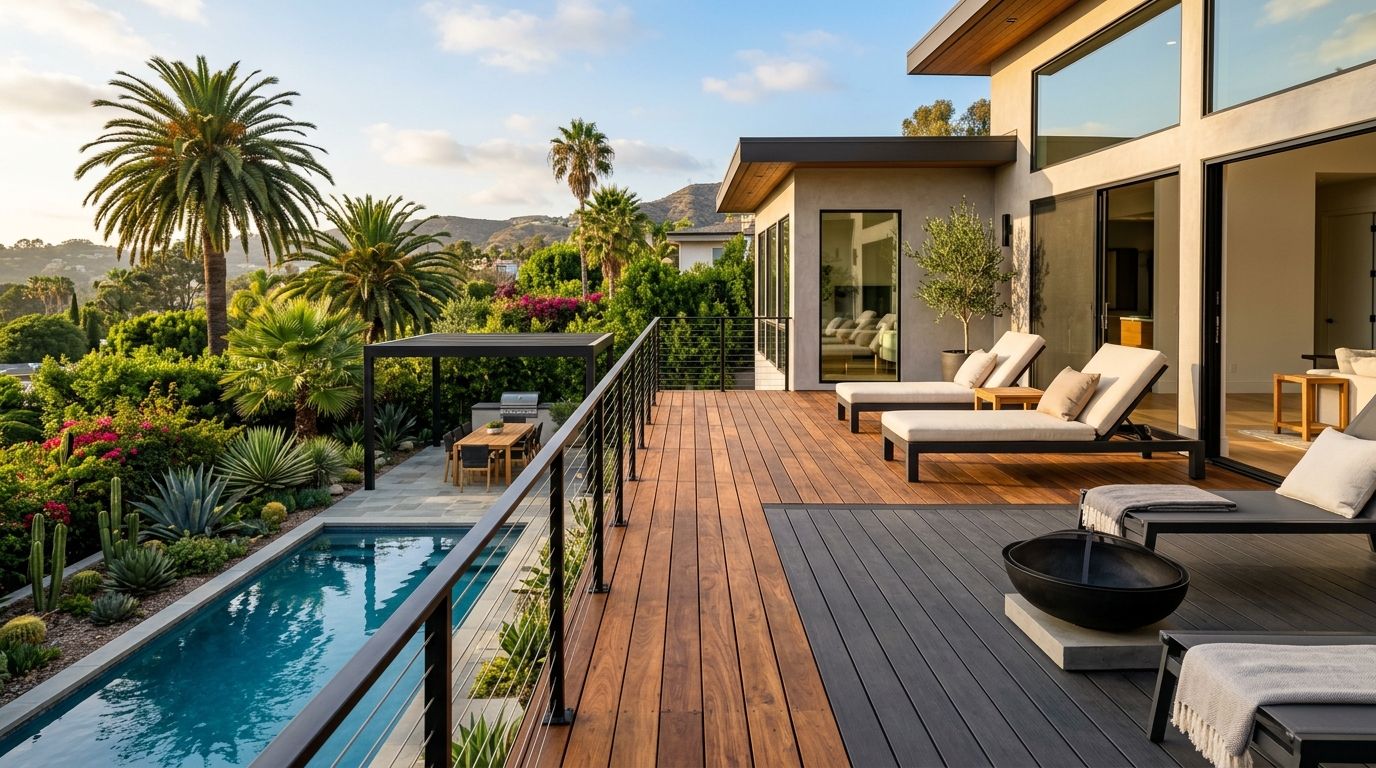
LA Decks: Wood vs. Composite Costs & Durability
For Los Angeles and Orange County homeowners, choosing between wood and composite decking involves a careful balance of initial cost, long-term durability, and maintenance. While wood decks, typically redwood or pressure-treated Douglas fir, offer a lower upfront price and a natural aesthetic, they require consistent upkeep like sealing and staining to prevent rot, warping, and insect damage in our climate. Composite decking, made from recycled plastic and wood fibers, presents a higher initial investment but significantly reduces maintenance needs, resisting fading, staining, and decay, and often comes with longer warranties. As a licensed contractor (CSLB Lic #1110475), I've seen firsthand how these differences play out over time, impacting both your budget and your enjoyment of your outdoor space. The best choice depends on your priorities for aesthetics, budget, and how much time you're willing to dedicate to upkeep.
When you're looking to build or replace a deck in the LA or OC area, you're faced with a fundamental decision: go with traditional wood or opt for modern composite materials. Both have their place, but understanding the nuances is key to avoiding costly mistakes down the line. My goal here is to give you the straight facts, based on years of hands-on experience building decks that stand up to Southern California's sun and occasional rains.
The Cost Breakdown: Initial vs. Long-Term
Let's get down to brass tacks. Initial cost is often the first thing homeowners consider, and this is where wood usually wins the first round. For a standard 10x12 foot deck, you might see costs ranging from $4,000 - $8,000 for a basic pressure-treated pine or redwood deck, including materials and labor. Higher-grade woods like Ipe can push this significantly higher, sometimes $15,000+ for the same size.
Composite decking, on the other hand, starts higher. For that same 10x12 foot deck, you're looking at an initial investment of roughly $7,000 - $12,000 for mid-range composite boards and standard installation. Premium composite lines with advanced features like enhanced UV protection or unique grain patterns can easily climb to $15,000 or more.
But this is just the opening bid. The real cost comparison comes with durability and maintenance. A wood deck, especially one exposed to intense Southern California sun and coastal air, will need regular attention. Budget for deck cleaning, sanding, staining, or sealing every 1-3 years. Over a 10-15 year lifespan, these maintenance costs can add up, potentially reaching several thousand dollars. Plus, you risk board replacement if rot or significant warping occurs, which is a common issue without diligent care.
Composite decks, while pricier upfront, largely eliminate these recurring expenses. Manufacturers typically offer 25-50 year warranties against staining, fading, and structural integrity. The primary maintenance involves occasional washing with soap and water to remove dirt or mildew. This minimal upkeep means a more predictable long-term cost and less hassle for you. For homeowners in areas like Pasadena or Santa Monica, where UV exposure is intense, the durability of composite can be a significant advantage.
Durability and Maintenance: A Tale of Two Materials
This is where the rubber meets the road. Wood decks are beautiful and offer that classic, natural look. However, they are organic materials susceptible to the elements. In Los Angeles and Orange County, we deal with:
- Sun Exposure: Intense UV rays can dry out wood, leading to cracking, warping, and fading.
- Moisture: While we don't get heavy rain often, occasional downpours or even morning dew can saturate wood, promoting mold and mildew growth if not properly sealed and ventilated.
- Insects: Termites and carpenter ants are a constant threat to untreated or poorly maintained wood structures.
- Wear and Tear: Foot traffic, furniture, and pets can all contribute to scratches and dents in softer wood species.
To combat this, regular maintenance is non-negotiable. This means cleaning the deck at least annually, inspecting for damage, and re-applying protective finishes every few years. This is a commitment of time and money that many homeowners underestimate.
Composite decking offers a compelling alternative focused on low maintenance. Modern composites are engineered to:
- Resist Fading and Staining: High-quality composites use advanced color technology that holds up much better to UV exposure than wood stains.
- Prevent Rot and Decay: Being a mix of plastic and wood fibers, they don't absorb moisture in the same way wood does, making them resistant to rot, warping, and splintering.
- Deter Insects: The materials used are generally unappealing to pests like termites.
- Offer Durability: They are designed to withstand heavy use and are often more scratch-resistant than softer wood options.
Brands like Trex and TimberTech have set high standards in the composite market. They offer various product lines with different textures, colors, and levels of performance. While they can get hot underfoot on a scorching Anaheim afternoon, many newer lines incorporate heat-reflective technology.
| Feature | Wood Decking (Pressure-Treated Pine/Redwood) | Composite Decking (Mid-Range) |
|---|---|---|
| Initial Cost (10x12 deck) | $4,000 - $8,000 | $7,000 - $12,000 |
| Durability | Moderate (requires diligent maintenance) | High (resists rot, fade, stain) |
| Maintenance Needs | Annual cleaning, sealing/staining every 1-3 years | Occasional washing |
| Lifespan | 10-20 years (with proper care) | 25-50+ years (often with warranty) |
| Environmental Impact | Renewable resource, but requires chemical treatments (PT) or can be resource-intensive (redwood) | Often uses recycled materials, but manufacturing process has footprint |
| Aesthetics | Natural, warm look; can be stained various colors | Consistent color, wood-like textures available; can look less natural to some |
Structural Considerations and Building Codes
Regardless of your material choice, proper construction is paramount. In Los Angeles and other cities in LA/OC, deck construction must comply with the California Residential Code (CRC) and local LADBS or city-specific building department requirements. This includes:
- Foundation: Properly poured concrete footings below the frost line (though less critical in milder coastal LA/OC zones, code still dictates depth and size).
- Framing: Using appropriately sized and graded lumber (like pressure-treated Douglas fir) for joists and beams. Connections are critical; using structural connectors like Simpson Strong-Tie hardware ensures integrity.
- Ledger Board Attachment: This is a common failure point if not done correctly, requiring proper flashing and bolting to the existing structure per CRC standards.
- Balusters and Railings: Must meet specific spacing and height requirements (typically 36 inches high, with balusters spaced less than 4 inches apart) to prevent falls, especially important for decks near swimming pools or elevated structures.
- Permitting: Most deck projects require a building permit. We handle this process, ensuring your deck meets all safety and code requirements, including Title 24 Part 6 energy efficiency considerations where applicable.
For existing decks, especially those built before recent code updates or inspection mandates like SB-721 and SB-326 (which primarily apply to multi-family dwellings but highlight common structural issues), an inspection might be wise. We can assess your current deck's condition and recommend necessary repairs or upgrades.
Which is Right for Your LA Home?
The decision often comes down to your lifestyle and budget priorities:
- Choose Wood If: You prefer the natural aesthetic, are on a tighter initial budget, and are committed to the regular maintenance required to keep it looking good and lasting long. You might also consider wood if you plan to stain it a specific color that composites don't offer.
- Choose Composite If: You prioritize low maintenance, long-term durability, and are willing to invest more upfront. You want a deck that looks consistently good with minimal effort and are comfortable with the look and feel of engineered materials. This is often a good choice for busy families or those who simply want to relax on their deck rather than work on it.
For many homeowners in the South Bay or Orange County coastal areas, the resistance of composite to salt air and humidity is a major draw. Meanwhile, those looking for a rustic or specific stained look might lean towards redwood or cedar, understanding the trade-offs.
Ultimately, building a deck is an investment in your home. Whether you choose wood or composite, ensuring it's built correctly to code by a licensed contractor like SkillSee (CSLB Lic #1110475) is the most critical step for safety, longevity, and value. We ensure every detail, from the foundation to the railing, is done right.
FAQ
Q: How much more does composite decking cost than wood in LA?
A: Composite decking typically costs 50-100% more upfront than basic pressure-treated wood for the materials alone. For a 10x12 foot deck, this can mean an initial price difference of $3,000 to $4,000 or more, not including installation variations. However, long-term costs can equalize or favor composite due to reduced maintenance and replacement needs.
Q: Does composite decking get hot in the California sun?
A: Yes, like most dark surfaces, composite decking can get hot under direct sunlight, especially during peak summer hours in places like the San Fernando Valley. However, newer composite technologies incorporate heat-reflective pigments and lighter color options that significantly reduce heat absorption compared to older generations. Proper ventilation under the deck also helps.
Q: Do I need a permit for a deck in Los Angeles County?
A: Yes, generally you will need a permit from your local building department (like LADBS for the City of LA) for new deck construction or significant deck replacement. This ensures the structure meets California Residential Code (CRC) safety standards. We manage the permitting process for you.
Considering a new deck or upgrading your existing one? We can help you navigate these choices and ensure a quality build. Get a free estimate from SkillSee today.
You can learn more about deck materials and maintenance on our site: Deck Materials and Deck Maintenance.
For more information on California contractor licensing and regulations, visit the CSLB website.