Unlock Your Property's Full Potential: Junior ADU vs. Detached ADU in LA
Hello, LA and Orange County homeowners! Dmitrii here, from SkillSee, your trusted general contractor. In our vibrant Southern California market, the Accessory Dwelling Unit (ADU) has become an absolute game-changer. Whether you're dreaming of rental income, a private space for family, or simply adding value to your property, ADUs offer incredible opportunities. But with different types available, how do you choose the right one for your home?
Today, we're diving deep into the two primary types of ADUs recognized under California law: the Junior ADU (JADU) and the Detached ADU. Understanding the key differences between them is crucial for making an informed decision that aligns with your vision and budget. Let's break it down!
Understanding the ADU Landscape in California
California has been at the forefront of encouraging ADU development to address housing shortages. These secondary units, often called 'granny flats' or 'in-law units,' are independent living spaces on the same lot as a primary residence. They provide flexibility for homeowners and contribute to diverse housing options in our communities. For a comprehensive overview of general ADU benefits and regulations, check out our dedicated ADU services page.
The state's progressive ADU laws, detailed by resources like the California Department of Housing and Community Development (HCD) ADU Handbook, have streamlined the permitting process, making it easier than ever to build. But even with simplified rules, knowing which type suits your property best is vital.
Junior ADU (JADU): The Integrated Solution
What is a Junior ADU?
A Junior ADU, or JADU, is a smaller, integrated living space created within the existing walls of a single-family home. Think of it as repurposing an underutilized bedroom, master suite, or even a portion of a living area. Key characteristics include:
- Location: Always within the existing footprint of the primary residence.
- Size Limit: A maximum of 500 square feet.
- Kitchenette: Must include an efficiency kitchen (sink, cooking appliance, refrigerator).
- Bathroom: Can share a bathroom with the main dwelling or have its own.
- Separate Entrance: Requires its own exterior entrance, separate from the main home's primary entrance.
- Owner Occupancy: Typically requires the owner to live in either the main dwelling or the JADU.
Advantages of a JADU
- Lower Cost: Utilizing existing walls, roof, and foundation significantly reduces construction costs compared to new construction.
- Faster Permitting: Generally a quicker and simpler permitting process due to fewer structural changes.
- Ideal for Specific Needs: Perfect for an in-law suite, a space for a college student, or a live-in caregiver where some proximity to the main home is desired.
- Minimal Lot Impact: Doesn't require additional yard space.
Considerations for JADUs
- Size Limitations: The 500 sq ft maximum might be too small for some needs.
- Shared Utilities/Space: While it has a separate entrance, the JADU is still part of the main house, which might impact privacy for some tenants or family members.
- Owner Occupancy: The requirement for the owner to live on-site can limit rental strategies.
Detached ADU: The Standalone Powerhouse
What is a Detached ADU?
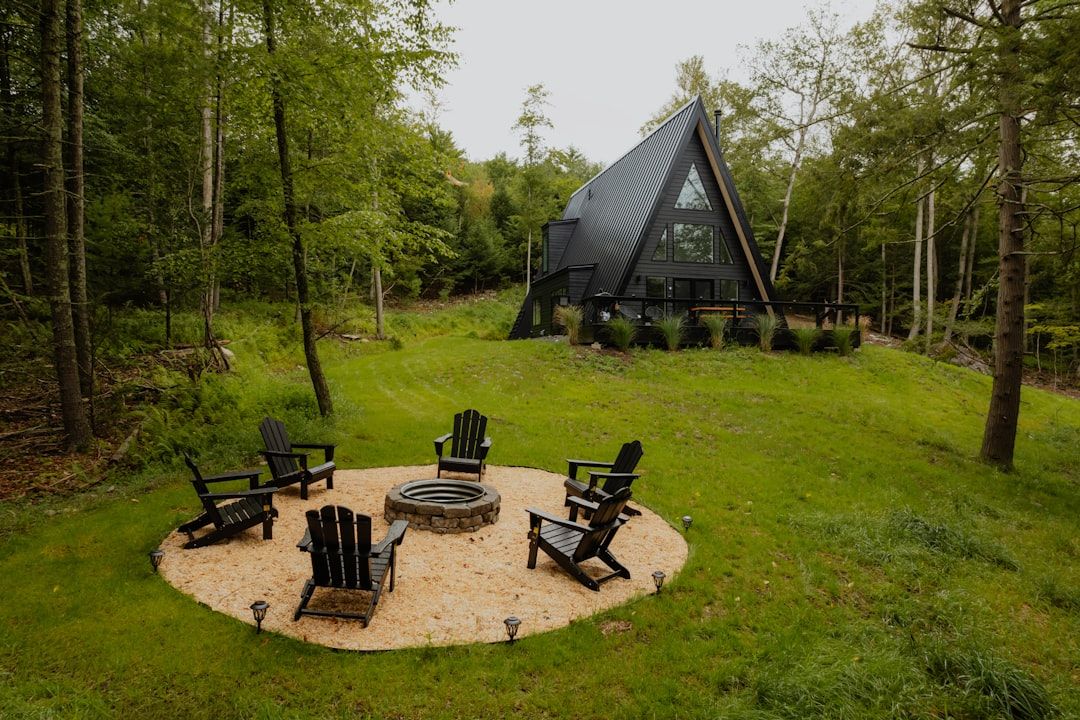
A Detached ADU is a completely separate structure on the same property as the primary residence. It's a self-contained unit with its own entrance, full kitchen, full bathroom, and living space. Detached ADUs offer maximum independence and privacy.
These can be:
- New Construction: A brand-new build in your backyard.
- Garage Conversion: Transforming an existing garage into a habitable living space. This is a highly popular option in LA! Learn more about garage conversions to ADU here.
Advantages of a Detached ADU
- Maximum Privacy: Offers complete separation from the main house, ideal for long-term rentals or independent family members.
- Greater Flexibility: More design freedom and generally larger sizes (up to 1200 square feet in many areas, depending on local ordinances like those by the Los Angeles Department of Building and Safety).
- Higher Rental Income Potential: The independence and larger size often command higher rental rates.
- No Owner Occupancy Requirement: As of 2020, California state law generally removed the owner-occupancy requirement for detached ADUs, allowing you to rent out both units.
Considerations for Detached ADUs
- Higher Construction Cost: New foundation, walls, roof, and all new utility connections mean a larger investment.
- Longer Permitting Process: Typically involves more complex plans and inspections than a JADU.
- Requires Sufficient Space: You'll need adequate backyard space to accommodate the new structure while adhering to setback requirements.
Junior ADU vs. Detached ADU: A Head-to-Head Comparison
Let's summarize the key differences to help you visualize your options:
- Location: JADU is inside the main home; Detached ADU is a separate structure.
- Size: JADU max 500 sq ft; Detached ADU typically up to 1200 sq ft.
- Cost: JADU generally lower; Detached ADU generally higher.
- Privacy: JADU offers less privacy (shared wall/structure); Detached ADU offers maximum privacy.
- Kitchen: JADU has an efficiency kitchenette; Detached ADU has a full kitchen.
- Owner Occupancy: JADU usually requires owner occupancy; Detached ADU generally does not.
- Construction: JADU is an interior remodel; Detached ADU is new construction or conversion.
Which ADU is Right for Your LA Home?
The choice between a Junior ADU and a Detached ADU boils down to several factors unique to your property and goals:
- Budget: If cost is a primary concern, a JADU is often the more economical entry point.
- Space Availability: Do you have ample backyard space for a new structure, or is repurposing existing interior space your best bet?
- Privacy Needs: How much independence do you or your future tenants/family members require?
- Rental Strategy: Are you looking for maximum rental income and flexibility, or a supplementary income with less upfront investment?
- Timeline: JADUs often have a shorter construction and permitting timeline.
Don't try to navigate these complexities alone. As a licensed general contractor in LA, SkillSee (CSLB #1110475) is here to guide you through every step. We understand the nuances of local zoning laws and building codes and can help you determine the most suitable ADU type for your specific property and aspirations.
Ready to explore your options and see which ADU can transform your property? Contact SkillSee today for a personalized consultation!
Q: What is the main difference between a Junior ADU (JADU) and a Detached ADU?
A: A Junior ADU (JADU) is always located within the existing footprint of a single-family home and is limited to 500 square feet, often sharing or having a small kitchenette. A Detached ADU, on the other hand, is a separate, standalone structure on the same property, offering complete independence and typically larger in size, up to 1200 square feet in many areas.
Q: Do I need to live on the property if I build an ADU in California?
A: For Junior ADUs (JADUs), California law typically requires the owner to reside in either the main dwelling or the JADU. For Detached ADUs, the owner-occupancy requirement was eliminated by state law in 2020, meaning you can rent out both the main house and the detached ADU without living on the property yourself, subject to local ordinances.
Q: What are the typical size limits for JADUs and Detached ADUs in Los Angeles?
A: Junior ADUs are capped at a maximum of 500 square feet. Detached ADUs can generally be up to 1200 square feet, though specific dimensions and setbacks are governed by local ordinances and lot size. It's crucial to consult with a licensed contractor like SkillSee to understand the exact regulations for your specific property.